Showing posts with label Friday Nights. Show all posts

Monday, January 15, 2007

BCon Classes Resume, Blog Additions


Welcome back students and faculty! The spring semester began with the first segments of Preservation Design Studio on Friday afternoon and Saturday. Since most Rensselaer Polytechnic Institute students don't return until tomorrow when most classes resume, we had the campus almost completely to ourselves.

As previously mentioned, we will generally be studying the upper Congress Street corridor (pictured above), building on the ongoing collaborative efforts of the City of Troy, Rensselaer Polytechnic Institute, Rensselaer County, the Troy Housing Authority, and private developers to redevelop the former Ahern Apartments (public housing) site on lower Congress Street and Rensselaer's construction of the new Electronic Media and Performing Arts Center and other improvements.

Beyond choosing a site, we have not determined what our final product or products will be. Students will learn about neighborhood planning and generally apply the four Main Street principles of Design, Organization, Promotion, and Economic Restructuring to the Congress Street corridor and possibly the adjoinging Mt. Ida/Hillside neighborhood. During the next two weeks students will be researching the history of the Congress Street corridor and surrounding area, collecting historic maps and photographs, and reading, abstracting, and reporting on the numerous planning studies and related documents that were handed out in class.

The studio will be taught by Building Conservation faculty members Steve Bedford, Amy Facca, and John Holehan (read more about them on our faculty web page), with periodic assistance from Barb Nelson; Norman Mintz, Main Street expert and co-author of Cities Back from the Edge, may also assist.

This semester's class will also include Preservation Law, taught by Dorothy Miner (who also teaches at Columbia University and Pace Law School); Professional Practice, taught by Ruth Pierpont (Director of the NYS Office of Parks, Recreation and Historic Preservation's Field Services Bureau); and Preservation Trades and Craftsmanship, taught by Don Carpentier of Eastfield Village (you can read more about them on our faculty web page).

Our Friday dinner was held at Lynn Kopka's and Joe Abbey's house in historic Washington Park, where students and faculty were joined by friends of the Building Conservation program, neighbors, and five building conservation alumni. Following dinner, many students attended the RPI hockey game.

In terms of recent blog additions, we have added a few links to the employment/jobs list and have added a sidebar section (below the Books! list) called the Reading Room. It now includes links to numerous publications such as Old House Journal, the National Building Museum's Blueprints newsletter, Metropolis, Places Journal, and numerous reference sites from the National Park Service, including the Preservation Briefs. We will be adding more publications to this list as we think of and encounter them, and we welcome any suggestions. We will also soon be adding posts about recent publications and reference materials we've come across online.

Monday, October 23, 2006

Friday Night Lights: Daisy Baker's Restaurant


While perhaps not quite as exciting as attending football games, our Friday night evening sessions are a highlight and very important part of the Building Conservation program. Generally speaking, this required course time, usually 5:00 to 8:00 p.m., is used as supplemental class time or time to tour a specific historic site, professional office, or project. However the time is used, it always includes dinner and involves both students and faculty.

In some cases, dinner is catered in and class work (such as during Preservation Design Studio in spring semester) continues or we hear from a guest speaker such as a local preservation architect, representative of the state historic preservation office, or stained glass conservation consultant. At other times, usually when we visit a specific site or office, students and faculty travel to the designated place and either have a catered dinner there or dine at a local restaurant with historic character (and, of course, good food).

The Friday night sessions enable the students to get to know one another, and facilitate close interaction between students, faculty, invited guests, friends of the program, and other professionals in the field. They also help establish a teamwork and collaboration orientation, rather than the competitive orientation of so many academic programs.

In past years, we have visited the offices of Mesick Cohen Wilson Baker Architects; John G. Waite Architects; Einhorn Yaffee Prescott; River Street Planning & Development; the New York State Office of Parks, Recreation and Historic Preservation; New York State Capitol; New York State Education Building; the Gardner Earl Chapel and Oakwood Cemetery; the city of Troy's Washington Park and Pottery District neighborhoods, and many other places.

Restaurants have included Smiths in Cohoes, New York; Brown's Brewing Company/Revolution Hall, Holmes & Watson, and South End Tavern in Troy, New York; and the Pump Station and Franklin's Tower in Albany.

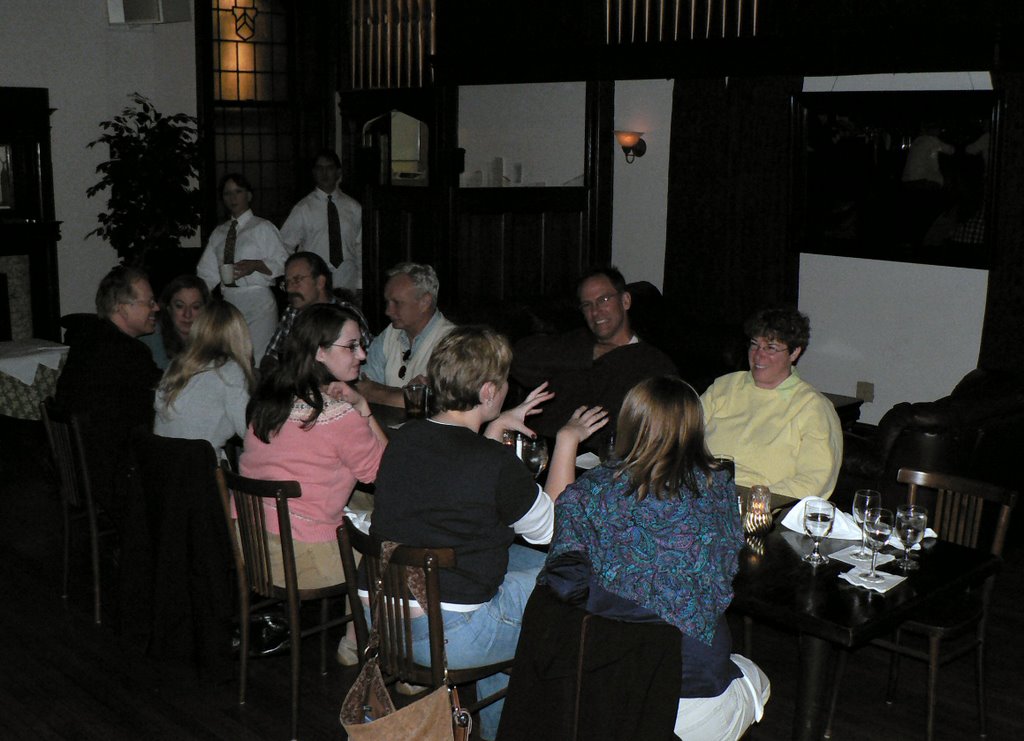
This week, the Friday night session was mainly social. Faculty and students met at the historic Daisy Baker's Restaurant, a Richardson Romanesque building originally constructed as Troy's YWCA.

Friday, October 06, 2006

EMPAC Construction Site Tour

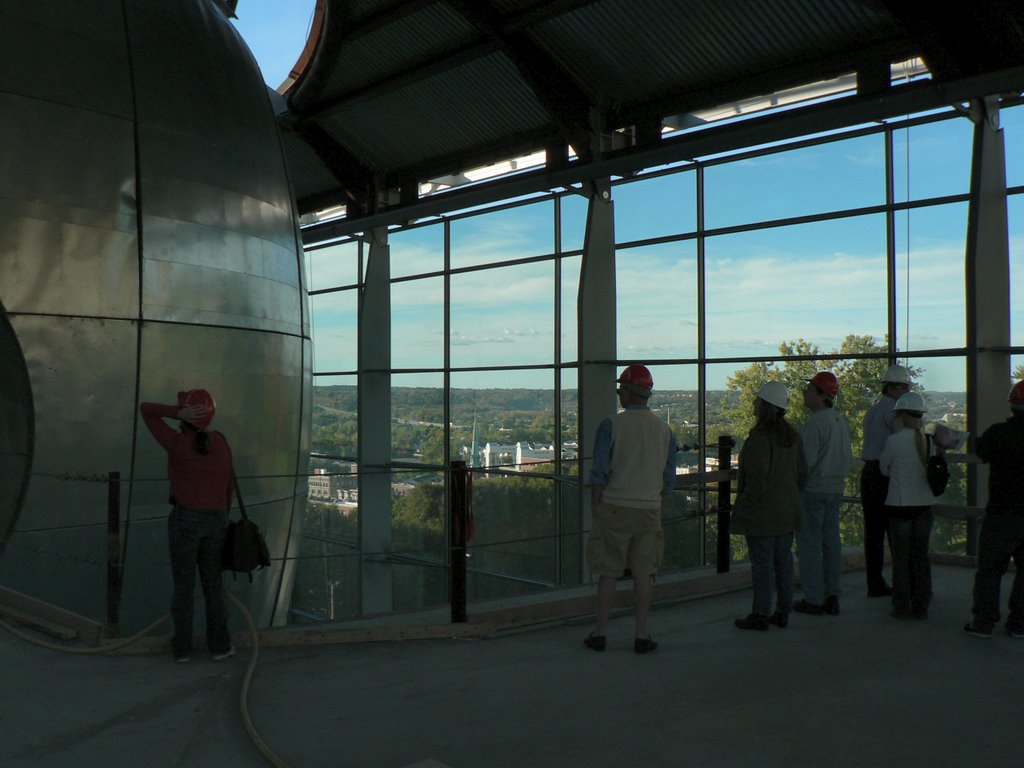
Following Economics of Historic Preservation in the morning, lunch in the Greene building, and Building Conservation I and II in the afternoon, Building Conservation program students and faculty toured the construction site of Rensselaer's new Experimental Media and Performing Arts Center and then gathered for a leisurely dinner at Brown's Brewing Company in historic downtown Troy, New York.


The Economics class focused on downtown revitalization, the National Trust for Historic Preservation's Main Street program, and business improvement districts. Students submitted their case study proposals, and will be intensively studying historic preservation policy, planning, and implementation projects in Somerville, Massachusetts; Charlestown, Massachusetts; Ithaca, New York; Wellsboro and Williamsport, Pennsylvania; Syracuse, New York; Utica, New York; Burlington, Vermont; and Oswego County, New York.

The Building Conservation (20th Century Building Materials) class focused on the use of metals in construction. The 20th century saw the use of traditional metals used in new ways and the formulation of new alloys, including nickel silver, monel, weathering and stainless steels, aluminum and titanium. Their properties, uses, care, preservation, deterioration and restoration were explored and notable examples were illustrated.

As noted on Rensselaer's home page, the 220,000-square foot EMPAC will contain a wide and flexible range of major venues including an atrium; 1,200-seat concert hall; 400-seat theater; 3,500-square-foot studio; 2,500-square-foot-studio; suites for artists-in-residence; rehearsal spaces; student and support spaces; professional recording, editing and post-production facilities; and digital broadcasting facilities. EMPAC is positioned at the southwest edge of campus on a steep bluff affording spectacular views of the city of Troy and Hudson River valley.


Brown's Brewing Company exemplifies a creative and evolving example of adaptive use and neighborhood revitalization. It occupies several historic warehouse buildings along the Hudson River in a commercial neighborhood that is being revitalized. Established as one of the region's first brew pubs in 1993, Brown's initially occupied two floors of a single commercial building that the small group of owners restored. In subsequent years, the owners have continued to make improvements, adding a deep porch overlooking the Hudson River along the building's rear facade, rehabilitating fire damaged upper floors into office space, and rehabilitating an adjoining building for use as Revolution Hall, a live performance venue.